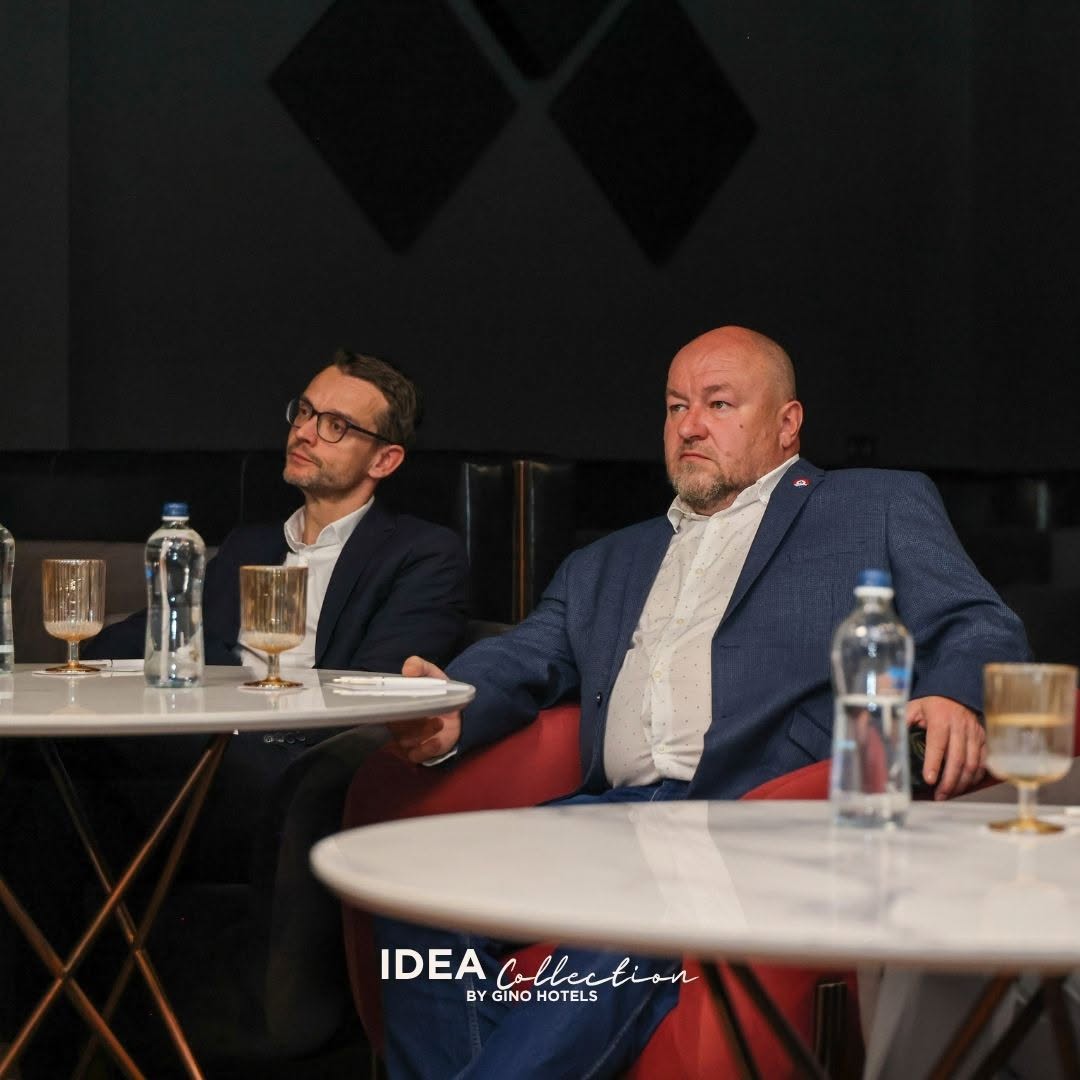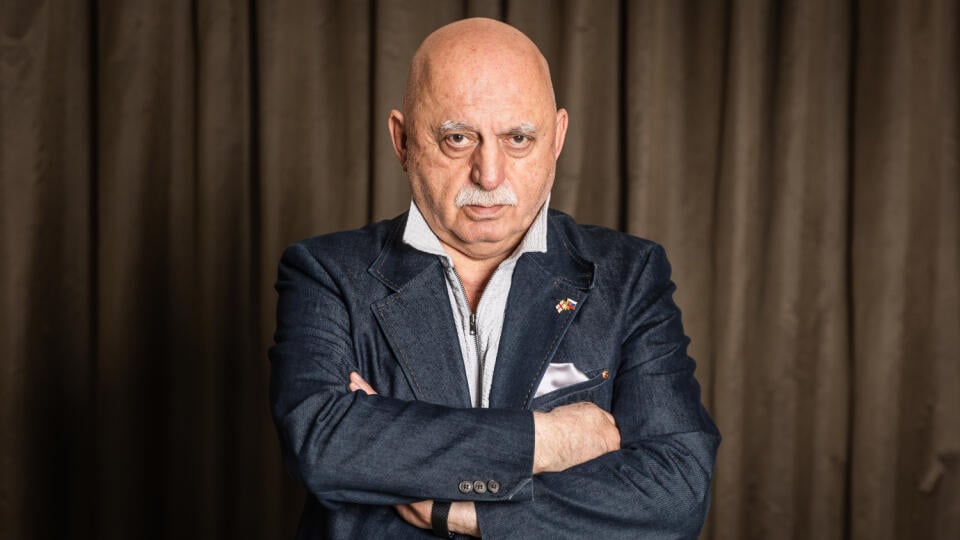
The photo shows Nodari Giorgadze, former Georgian Communist Party official, deputy minister of defence and ambassador, currently investor and president of Gino Holding Group.
Educated as a physicist, lawyer and doctor of economics, former soldier in Afghanistan and appointed Georgian Minister of Defence, politician, diplomat and advisor to President Eduard Shevardnadze with an adventurous biography, Georgian and Slovak Nodari Giorgadze chose Slovakia for his career among several options. Apart from the beautiful Slovak nature, the founder of the aquapark in Besenova was attracted by good people, customs similar to those in his native country and investment opportunities. After the construction of Bešeňová, he started building apartment houses, hotel business, energy business, but he also returned to diplomacy, this time trade and business. In Georgia, he is building similar or even larger projects to those in Slovakia, which open doors for Slovak investors, entrepreneurs and politicians.
The video is online at: https://www.trend.sk/spravy/ako-vznika-male-slovensko-gruzinsku-preco-krajiny-oplati-investovat
Why did you decide to live and do business in Slovakia?
Thanks to Laco. In 1993, the Georgian government and President E. Shevardnadze decided to send the country's ambassadors abroad. As a senior advisor to the president and deputy minister of defense, I came to Austria as part of a diplomatic mission. I also went to Slovakia and bought a cottage in Veliki Uherce near Partizanske.
One winter we went for a weekend with my family and the family of my friends from Austria to that cottage. But there was no water and by Friday night the situation was desperate. The hut is big, nice, but no water. There was snow outside, minus ten degrees. A guy saw me in a house about 70 meters from mine. It was Laco, the chief technologist at the local shoe factory. He selflessly rescued us, disconnected his water and connected ours. That's when I told myself that if I ever had to live anywhere else than Georgia, it would be in Slovakia.
And finally it happened.
After my diplomatic mission in Vienna, I was offered to return to my homeland and stay in Austria. At that time, however, the Besen project was beginning to develop promisingly, so Slovakia was the obvious choice. Moreover, Georgians and Slovaks are mentally close, we have similar traditions and customs.
Slovakia has many riches, forests, water, mountains. But the greatest wealth is the human factor. It is the human heart, good relations, trust, honesty and willingness to help.
Your first project was the aquapark Bešeňová. Why this one?
I was almost 50 years old at the time and had worked for the state all my life until then. I wanted to prove that I could build something of my own without state support. At that time, the Bešeňová swimming pool was in a catastrophic situation, burdened with foreclosures and huge debts. I proposed to the owners that I would take over all the debts and settle them. This is how I started the development of the Besenova project. It was hard work. I bought it in December 2003.
How did it turn out?
It was then that Tatralandia was opened, only 25 kilometres from Bešeňová, 28 hectares with excellent attractions, swimming pools, even a thermal one. It was a big challenge and a big risk. But I believed in my project and in the philosophy that the water park in Bešeňová would offer everything people need for undisturbed relaxation. Both attendance and sales gradually grew. Over time, Bešeňová overtook Tatralandia and became a popular place for foreign, but importantly, also for domestic guests.
Why did you choose a water park? Did you think from the beginning about connecting with an apartment hotel?
No, I wasn't thinking about apartments at the time. I actually bought Besenova by accident. I drove by and stopped there. Then it occurred to me that I could buy Besenova and do business in the area. As a trained physicist, doctor of economics and lawyer, I wanted to see how I could cope with this task. Immediately after buying the site, I visited twelve countries in Europe, America and Asia. I looked at different waterparks and found out what their philosophy was, what they deserved and what people liked.
And what did you find out?
The thought system is different in America, different in Europe, different in Asia. Well, all people have two arms, two legs, so I was looking for the most important thing on which all this is based.
In Slovakia, people used to go to taverns, whole families with children used to gather there. In order to be able to move to a water park, there should be an environment where they can relax undisturbed and find all the services. It is also very important to have a sense of security, that the child will not get lost and that the parents are always in sight. That is why we have built Besenova in such a way that no one from the outside can get in or out without being checked. The accommodation part is built so that one can see the grounds and all the pools from one's room.
Does this also apply to the new apartment hotel project?
Our latest project, which we opened in 2021, is the Aquamarine Hotel - a nine-storey, four-star hotel with 235 apartments and studios directly connected to the water world. It's a project that people have loved. According to the European Water Park Association, the water park in Bešeňová has been one of the top ten water parks in Europe since 2009. Even the new owners from TMR make sure that everything works perfectly.
Did you sell the waterpark as a whole?
I didn't sell it, but it was good to donate or marry as a child. And as a good father, I check that all is well in the family. It looks like it's going great. Well, I didn't sell everything, I kept some in Besenova.
How long did it take to recoup your initial investment?
It became profitable in 2012. The real profit came two years after the financial crisis and Bešeňová is still generating it today.
You say you have kept some shares. Why?
I kept some of the land, including the land on which the apartment hotel is built. We built the apartments and sold part of them so that we didn't have to take out a bank loan. So the whole construction was done with the help of the buyers' money. We started construction in 2019 and continued during the pandemic. It was difficult, but we were only three or four months late in handing over the building. Since then, we have fulfilled all the obligations we have to the condo owners. Every quarter they all receive the returns we promised them.
How does the apartment building model work?
Back in 2008 and 2009, when we started building apartments in the water park, we launched a program with a simple offer - we build the apartments, you buy them, we operate them, and 65 percent of the profits go to you and 35 percent to us. You won't have any worries and you'll earn a little extra. And it worked great.
Did you apply this principle to Aquamarine?
There, we created a model based on the purchase of an apartment, giving investors not a floating, but a guaranteed return of six to seven percent. An investor buys an apartment for, say, €100 and gets a guaranteed return every quarter without having to deal with anything. We run everything, we take care of the heating, electricity, repairs, maintenance, and the investors only get a return. The most important thing is that although they can get the yield in the bank, at the end of the period they are only left with money that has been devalued by inflation. In this case, they have real estate that increases in value over time. In addition, they can keep the flats to themselves for a certain period of the year - up to 28 days if they are unoccupied. At the beginning, the selling price per square meter was three thousand euros, the latest ones already cost more than twice that.
After Bešeňová you embarked on other projects. What made you do it?
A friend once showed me the manor house in Orlov in Považská Bystrica, which was in a terrible state. A quarter of the roof did not exist, it was leaking and nothing worked. There was an opportunity to buy the manor. At first I didn't want to, but when I thought about it more, I thought, why not? I am a Georgian who came to Slovakia with empty pockets. I became a citizen of the country, a businessman, I earned money here. Why should I invest elsewhere? That's why I decided to buy the manor house and slowly reconstruct it. Originally, I thought it would cost a maximum of three million euros.
Before the reconstruction, we carried out an architectural-historical survey, which was carried out by an international team and which resulted in a historical book about the manor house from 1612, but also about the history of the Považie region in general. I was intrigued and decided that if I was going to do a reconstruction, it had to be spectacular. That is why it cost three to twelve million euros instead. The result has been outstanding, and in 2018 the Manor House was ranked among the top 50 boutique hotels in the world, and last year it became the best historic wedding hotel in Europe.
Does it make economic sense?
There are 47 rooms in the manor house. Friends ask me the same question as you - where is the economy? Well, not everything has to revolve around the economy. There's something about pride. So I gave back the money I earned in the country. Before, the monarchs and the nobility used to meet in the mansion, but nowadays normal Slovaks, Georgians, Hungarians, Poles and Czechs go there. We sit there, look at the beauty and say "praise God".
What does success mean to you?
Besenova is running fantastically, when you go there today, it's almost like a little Beverly Hills. In the mansion it's just as fantastic. A beautiful hotel, a beautiful English forest park, it all took a lot of money. But so far I haven't met anybody who has left this world and taken money or possessions with them. And when somebody left something behind, it was only a good name or the works they had built. That is success. To leave behind something of value. For me, it's not just about selling, buying, making money. I'm just building things that very few people can do. That's my hobby.
You also contribute to the prosperity of a place or region with your buildings.
When doing business, it is also important who represents the municipality. In Bešeňová, for example, Martin Baran is the mayor. He is a fantastic, very intelligent person who loves the community, the people and wants to do something special for them. In the beginning, there were no good roads or lighting in the village. Together with him, we have managed to create what is there at the moment. Before, in the old part of Besenova there were 375 people living there and 127 registered buildings. Today almost every house has a hotel or hostel with cafes or restaurants. The citizens are richer today, Bešeňová now has almost a thousand inhabitants. Apart from Bešeňová, Liptovský Michal, Liptovská Teplá, Ivachnova and other villages are thriving. Together with the mayors of the surrounding villages and mayors of the towns, we have established the Liptov tourist cluster. I even organised an expedition of mayors to Georgia to meet colleagues from another country.
In Slovakia, you also do business in the gastronomy and energy sectors.
I operate restaurants in Apollo Center, Lakeside Park and Aupark. We have tried to offer our own concept with a menu of Georgian and Italian specialties. I am also involved in photovoltaics, we have built two photovoltaic power plants in Kamenichno with four megawatts and one megawatt. In Ivachnova we are preparing a large housing project on five hectares, it is to be a new village with all services. We want to get the permits within the next year and the implementation will be within five years.
However, you are carrying out bigger projects in Georgia. Why?
The reason is simple - much more needs to be done in Georgia than in Slovakia. Many things have already been built here. The European Union and European funds, the state, have contributed significantly to this. The support has been more than EUR 50 billion, which is a huge amount of aid for the development of the economy and infrastructure, such as roads and motorways. Georgia is only now approaching that. It is where Slovakia was in 2000.
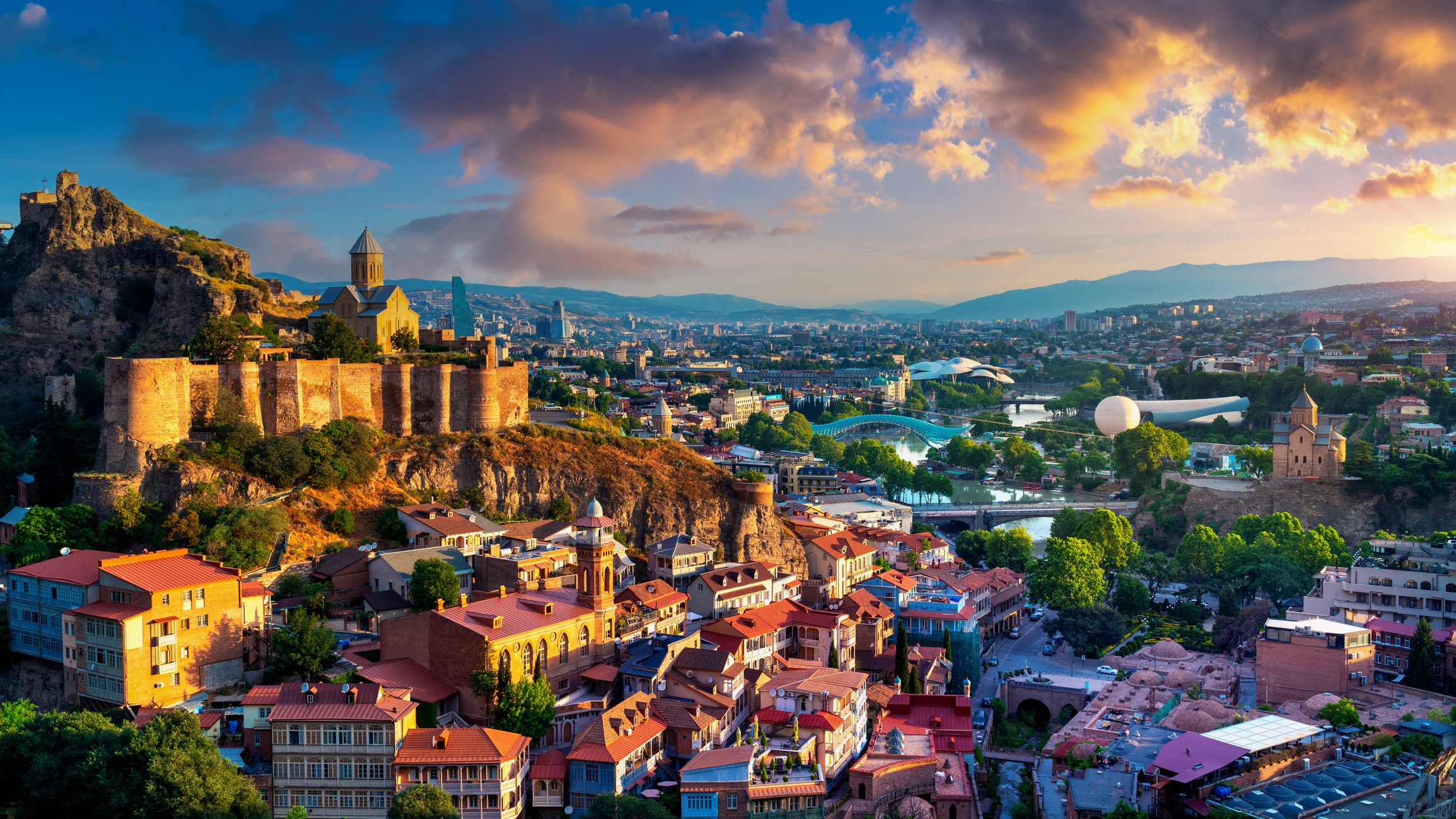
That's why now is the time to invest in Georgia. Today, land can be bought for ten to twenty euros. Well, in a few years they will cost a hundred euros. Not to mention the cost of materials and labour. These are all parameters that need to be taken into account. That is why there is a huge opportunity to invest well in Georgia today. For example, we are going to build a small spa town on a thirty-hectare area right by the Tbilisi Sea. The zoning plan was approved in May 2024.
Can you tell us more about the biggest projects in Georgia?
The biggest project we are implementing there is Tbilisi Boulevard - Little Slovakia. There will be 29 square metres of buildings on 350 hectares. 60 million euros have already been invested in this area, and now we are starting the third stage - the Promenada hotel, which is something similar to the promenade by Eurovea. And we are also inviting Slovak investors there.
When the project is completed, approximately four thousand people will live on 29 hectares of land. The capacity of the hotel should be around 700 rooms. The water park, which can accommodate up to eight thousand people at a time, will also be expanded. In addition, there will be a convention centre, a kindergarten, a school, a polyclinic and a spa town. On one side there is a water reservoir, which the locals call the Tbilisi Sea, on the other side a forest, on the third side an arboretum, and on the southern side the Gino Paradise Tbilisi water park and the five-star Gino Seaside hotel.
Do you have other projects in Georgia?
We are currently building the Gino Grand Hotel Tbilisi in the historic centre of Tbilisi. This building is also being built with purely Slovak investments. The boutique hotel Thermal in the Bakuriani ski resort is also ready to be built. There is snow there from the end of November to the beginning of May. It has the best climatic conditions and the only place where there is a borehole with warm geothermal water. So we will have the only boutique hotel with thermal water in the region.
But probably the biggest investment is Tbilisi Boulevard - Little Slovakia. What is its goal?
Little Slovakia will be established on an area of 29 hectares in the capital city of Tbilisi. I, as a natural person and citizen of Slovakia, or my company, own the entire land plot. The investment was from my money or my company's money, some support came from the Slovak Eximbank. We have already invested 60 million euros there and we have established several streets. One is called Liptovská, the other Bešeňová.
Košická, Žilinská and Banskobystrická streets will be added. So it's Little Slovakia. And that is why I invite Slovaks to invest in the third phase, which is at the level of EUR 200 million. As Slovaks, we do not have anything like this in the world yet, but we should. We have the ambition, we have earned it and we will certainly build it.
You recently welcomed a Slovak government delegation there, so your activity connects two countries, two business environments.
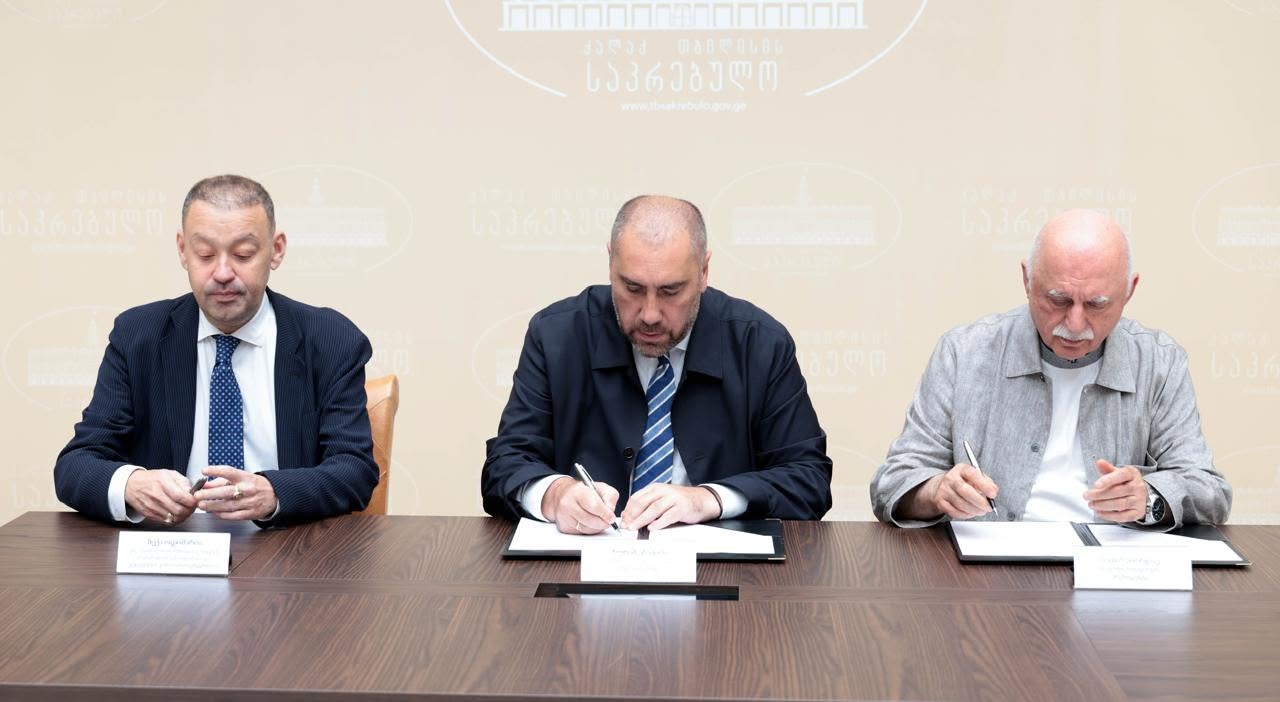
This year we celebrated the tenth anniversary of the first Slovak investment in Georgia, namely in an aquapark. Since 2014, we have invested EUR 110 million in projects in Georgia. That is why I have asked the Slovak Government to take the time to come to Georgia and see what we are investing in. It is a sense of pride when the Slovak flag flies in Georgia, when a building bears the Slovak name.
After the meetings of the ministers of both countries, the government delegation visited the water park and familiarised themselves with its functioning. The Georgian government saw the interest of the Slovak government and increased its support. I thank the entire Slovak delegation for their support. This is a concrete example of cooperation between the government and businesses in favour of spreading Slovakia's reputation abroad.
So positive impulses bring positive results?
On each building, members of the government could see who built it. There is a Slovak flag on it, plus the inscription "This is a Slovak investment". And where the construction was supported by an eximbank, also "Supported by an eximbank". And that is an important thing, because Germans, French, Indians, Chinese and Americans also go there. And when they see our flag, it's something that every person can be proud of.
Dr. Nodari Giorgadze
Born in Tbilisi, he studied physics and international law in the Georgian capital. He completed his doctoral studies at the Academy of International Law and Economics in Moscow. After graduation, he worked as an engineer and served two years in Afghanistan. On his return, he worked as chief of police in Tbilisi, later becoming acting minister of defence, member of parliament, head of the parliamentary party and advisor to President E. Shevardnadze. From 1993 he served as the first ambassador to Vienna. As Head of Delegation, he represented Georgia at the Organisation for Security and Cooperation in Europe and was Georgia's Permanent Representative to the UN European Headquarters in Vienna. He also served as General Delegate for Central and Eastern European countries to the World War Veterans Organisation based in Paris. He has lived in Slovakia since 2001, has been a citizen of the Slovak Republic since 2003 and has been the Honorary Consul of Georgia in the Slovak Republic since 2016. He is an honorary citizen of Beshenova and Tbilisi.
Source.
Giorgadze: I build things that few people can do | TREND
Ronald Izip
Editor-in-Chief